Cultural Competence in Corona Outreach with Arabic-speaking Families
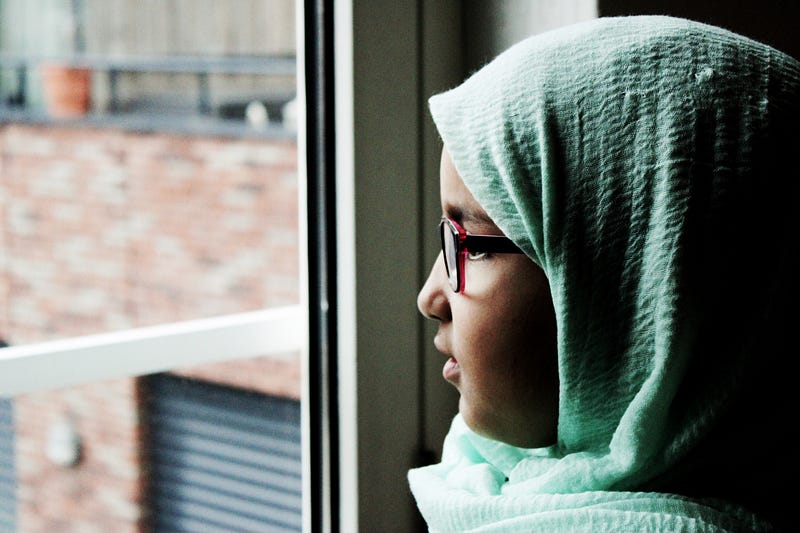
There are around 405,000 Arab immigrants in New York City. Many of those who moved to New York since 2010, came as refugees. Not all of these families are Muslim, but many are. Arabic-speaking families are often isolated from enrichment programs and other opportunities as well as services because of the language and cultural barrier. When I work with schools and youth programs, one of the things I hear often is that ten years ago, most of their youth spoke English or Spanish at home, but now they have at least one and sometimes many kids who speak Arabic at home*. Schools and non-profit organizations typically have Spanish-speakers on staff, but they have not caught up yet with Arabic.
This week, I asked a Moroccan Muslim woman if she had any advice on cultural competence related to outreach to Arabic-speaking families**. What she said was that right now, for her family and most Arabic-speaking families she knows, belief is very important. Families are taking the time to pray five times a day, and teach their children Arabic in addition to their school work. She very pragmatically said: focusing on belief is calming, for both adults and children. Her 19 year old daughter had come to her frightened at the beginning of lock downs and said, “Mama, I’m scared we’re all going to die.”
She said that she told her daughter, “We are all going to die, some day, but that doesn’t mean we need to be afraid.”
This is what belief means to her — peace in acceptance of the realities of life, like death, calming and grounding rituals, and connection with her culture. I am a Quaker and my beliefs are very different from hers, but I agreed with everything she said.
Arabic-speaking and Muslim families are in need of support and outreach as much as all families right now, and I wonder how the difficulty we have in the US talking about religion and belief is getting in the way of effective communication and support. One of the biggest issues right now is parents not being able to ask for help, and not getting the type of help we actually need. I can imagine that an Arabic-speaking mother, who may already be struggling with communicating in English, would not feel comfortable asking for help when the person offering it does not even acknowledge something that is central to how she is processing the COVID-19 pandemic.
So what can we do to ensure Arabic-speaking families are not left out of our networks or support?
First, whenever you are looking to extend support to a community that is not your own, it is most important to find out who local leaders are, encourage and fund their work, and figure out how you can complement their work rather than competing or taking it over.
When you are reaching out to Arabic-speaking families, here are some ideas of how to more effectively work across cultural and language barriers:
- Use culturally appropriate greetings. Greetings themselves are also of cultural importance, much like how in the South you always ask “how are you doing?” before you get to the meat of the conversation.
- Ask about extended family members. Arab and African cultures often place strong values on collective family and interdependence, and family is of central importance in Islam.
- Be mindful of prayer times when calling. Families who are not normally able to pray five times a day may be doing so now.
- When offering resources for children, include ones that celebrate Arab and Islamic culture like Arabic calligraphy coloring pages, and content by Muslim artists such as Shamsia Hasani (she is awesome!).
- In many Arab cultures, it is frowned upon to complain. This means that asking “what help do you need?” may not be effective. Framing support as resources or tools and as something available to everyone may help — i.e. so the person doesn’t have to say that something is wrong in order to get support. Because of mental health stigma, it may be wise to steer away from mental illness-related language unless this is what the person is specifically asking for (i.e. trauma, anxiety, depression, etc).
And lastly, I think it is important to ask questions when you are unsure, to apologize when you make mistakes, and to say thank you when someone teaches you about their culture.
This is my opinion, based on one conversation and some reading, so I certainly got some things wrong and am missing important key points. If there is anyone reading this who has more cultural competence than I do and would like to make suggestions, I thank you for taking the time to do so. I am not an expert on Arab American immigrants and culture. Unfortunately, neither are many of the people working in schools, social services, and non-profit organizations serving diverse populations. I hope that I can at least help contribute to the conversation about how we can ensure no one is left out of the resources and support being offered to families.
*Language diversity in schools is of course more complicated than this! In New York City, students speak more than 180 languages at home, and for almost half of students, their home language is not English.
**I have her permission to post this, and am not giving her name out of respect for her privacy.